雍正御制款珐琅彩花鸟纹碗:瓷韵里的御窑风华与文人意趣
在中国清代雍正朝御窑彩瓷的艺术谱系中,这对雍正御制款珐琅彩花鸟纹碗,是雍正朝御窑工艺巅峰与宫廷文人审美融合的经典重器。它以白瓷为胎、黄釉为地、珐琅彩为饰,将珐琅彩的明艳色彩、花鸟纹的清雅意境与“雍正御制”的皇家身份融为一体,在莹润的瓷胎与雅致的釉彩间,诉说着“瓷以载雅,彩以彰尊”的时代逻辑,既是雍正珐琅彩瓷的代表性器物,更是清代宫廷“御窑彩瓷文人化”审美风尚的生动注脚。
In the artistic genealogy of colored porcelain from the Yongzheng imperial kiln of the Qing Dynasty, this pair of enamel-colored flower and bird bowls with the mark of "Yongzheng Imperial Production" is a classic masterpiece that integrates the pinnacle craftsmanship of the Yongzheng imperial kiln with the literati aesthetics of the court. With white porcelain as the body, yellow glaze as the base, and enamel colors as decoration, it combines the bright colors of enamel, the elegant artistic conception of flower and bird patterns, and the royal identity of "Yongzheng Imperial Production". Between the smooth porcelain body and the elegant glazes, it conveys the era's logic of "porcelain carries elegance, colors display dignity", serving as both a representative vessel of Yongzheng enamel porcelain and a vivid footnote to the aesthetic fashion of "literati-oriented imperial kiln colored porcelain" in the Qing court.
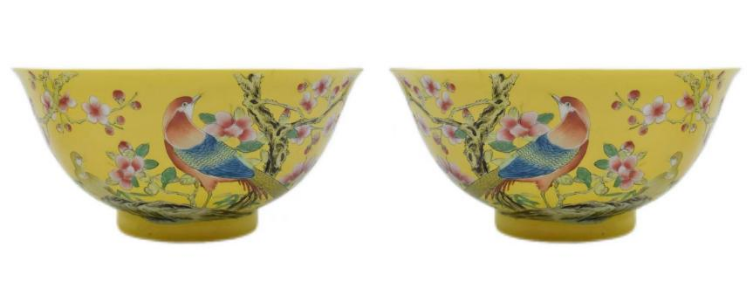
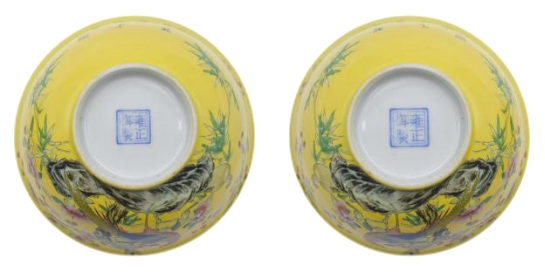
从形制与造型维度审视,这对碗尽显“形承古制,韵塑御窑”的特质。碗身取撇口、弧腹、圈足的经典形制,线条从口沿的纤细缓缓过渡至腹部的饱满,整体造型轻盈秀雅,既延续了明代官窑碗“器型规整,线条流畅”的制式传统,又因雍正朝制瓷工艺的成熟,在胎体厚薄与线条弧度的把控上更显精准;碗口与底足均以白釉勾勒轮廓,腹身的花鸟纹与底部的竹石纹形成视觉呼应,与康熙朝珐琅彩碗的厚重风格形成鲜明对比。每一处轮廓的打磨、每一个弧度的塑造,都凝聚着对“清代雍正御窑碗式形制美学”的精准表达,成为解析雍正御窑制瓷工艺的物质纽带。
From the perspective of shape and modeling, this pair of bowls fully demonstrates the characteristic of "inheriting ancient forms, embodying imperial kiln charm". The bowls adopt the classic shape of a flared mouth, curved belly, and ring foot, with lines gently transitioning from the slender mouth to the full belly, presenting a light and elegant overall appearance. This not only inherits the Ming Dynasty imperial kiln tradition of "neat shape and smooth lines" for bowls, but also shows more precise control over body thickness and curve radii due to the mature porcelain-making technology of the Yongzheng period; both the mouth and foot are outlined with white glaze, and the flower and bird patterns on the belly echo the bamboo and stone patterns at the bottom, contrasting sharply with the heavy style of Kangxi enamel bowls. Every polishing of the outline and shaping of the curve embodies the precise expression of "the formal aesthetics of Yongzheng imperial kiln bowl shapes", serving as a material link for analyzing the craftsmanship of the Yongzheng imperial kiln.
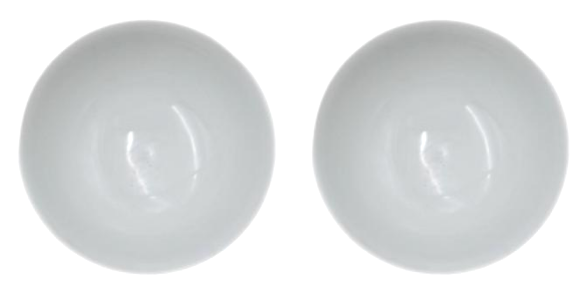
釉彩与工艺层面,这对碗承载着“黄釉为地,珐琅为彩,花鸟为魂”的创作追求。其胎体选用景德镇御窑厂的顶级高岭土,经多次淘洗与烧制形成细腻的白瓷胎,碗壁坚致且釉面莹润,是雍正御窑制胎工艺的典型体现;碗身以低温黄釉为地,釉色均匀浓艳,呈现出雍正朝黄釉“色如蜜蜡,光润雅致”的特征,为清代低温颜色釉的上乘之作;地子之上以珐琅彩绘制花鸟纹,锦鸡的羽毛以浓淡蓝绿层次表现质感,梅花的花瓣以粉白晕染勾勒,竹石的纹理以墨色皴擦凸显,尽显雍正御窑“精工细作,雅而不艳”的工艺特征。尤为精妙的是,匠人以白釉留白凸显花鸟纹主体,黄釉的华贵与白釉的素净形成强烈视觉冲击,与雍正朝“尚雅崇简”的制瓷理念不谋而合。碗底的“雍正御制”四字篆书款识以青花书写,字体端正、布局规整,成为辨识雍正御窑珐琅彩瓷的重要依据。每一处釉彩的晕染、每一次线条的挥洒,都在无声诉说着雍正御窑匠人对制瓷工艺的极致把控,使碗既具陈设的美学价值,更显御窑的工艺水准。
In terms of glazes and craftsmanship, this pair of bowls embodies the creative pursuit of "yellow glaze as the base, enamel as color, flowers and birds as soul". Its body is made of top-grade kaolin from the Jingdezhen imperial kiln, refined through multiple washings and firings into a fine white porcelain body, with a firm wall and smooth glaze—typical of the Yongzheng imperial kiln's body-making craftsmanship; the bowl body is coated with low-temperature yellow glaze, which is uniform and rich in color, exhibiting the Yongzheng period yellow glaze characteristic of "color like beeswax, smooth and elegant", making it a top-tier work of Qing Dynasty low-temperature color glaze; on the base, flower and bird patterns are painted with enamel colors, with the feathers of the golden pheasant showing texture through layers of dark and light blue-green, the petals of the plum blossoms outlined with pink and white rendering, and the textures of the bamboo and stones highlighted with ink texturing, fully demonstrating the Yongzheng imperial kiln's feature of "exquisite craftsmanship, elegant but not gaudy". What is particularly exquisite is that the craftsman used white glaze reserves to highlight the flower and bird motifs, creating a strong visual contrast between the luxurious yellow glaze and the pure white glaze, which aligns with the Yongzheng court's porcelain-making concept of "advocating elegance and simplicity". The four-character seal script mark "Yongzheng Imperial Production" on the bottom is written in blue and white, with neat characters and a regular layout, serving as an important basis for identifying Yongzheng imperial kiln enamel porcelain. Every glaze rendering and line stroke silently tell of the Yongzheng imperial kiln craftsmen's ultimate control over porcelain-making, making the bowls not only aesthetically valuable for display but also a showcase of imperial kiln craftsmanship.
文化价值与时代意义维度看,这对雍正珐琅彩花鸟纹碗是清代珐琅彩瓷发展的“微观镜像”。雍正朝是清代珐琅彩瓷的鼎盛时期,御窑厂将黄釉、珐琅彩、文人画等多种元素融合,开创了清代宫廷彩瓷“雅俗共赏”的审美新范式,这对碗便是这一工艺融合的典型样本——它既保留了清代御窑瓷“胎质精良,工艺精湛”的传统,又以花鸟纹的题材展现宫廷文人的审美意趣,是“雍正朝御窑彩瓷文人化”的直观体现。在当代收藏语境下,它不仅是一对清代御窑碗,更是解析雍正朝制瓷史、宫廷审美史的关键标本:其价值不仅在于工艺的精湛与形制的经典,更在于它所承载的“清代宫廷彩瓷文化记忆”,每一寸瓷胎的肌理、每一处花鸟的描绘,都在诉说着清代珐琅彩瓷从初创到鼎盛的风格演变,成为连接雍正朝宫廷艺术与当代收藏视野的精神纽带。此外,雍正珐琅彩花鸟纹碗存世量极为稀少,尤其是成对保存、品相上乘的珍品,更成为古瓷收藏领域的顶级瑰宝,其历史与艺术价值均不可估量。
From the perspective of cultural value and epochal significance, this pair of Yongzheng enamel-colored flower and bird bowls is a "micro mirror" of the development of Qing Dynasty enamel porcelain. The Yongzheng period was the peak of Qing Dynasty enamel porcelain, during which the imperial kiln integrated multiple elements such as yellow glaze, enamel color, and literati painting, creating a new aesthetic paradigm of "appealing to both refined and popular tastes" for court porcelain. This pair of bowls is a typical sample of this technological integration—it not only retains the Qing imperial kiln tradition of "excellent body quality and exquisite craftsmanship" but also expresses the aesthetic interest of court literati through the flower and bird theme, serving as an intuitive embodiment of the "literati-oriented Yongzheng imperial kiln colored porcelain". In the contemporary collection context, it is not only a pair of Qing imperial kiln bowls but also a key specimen for analyzing the history of Yongzheng porcelain-making and court aesthetics: its value lies not only in its exquisite craftsmanship and classic shape but also in the "cultural memory of Qing court colored porcelain" it carries. Every inch of porcelain texture and every depiction of flowers and birds tells the stylistic evolution of Qing enamel porcelain from its inception to its peak, becoming a spiritual link connecting Yongzheng court art with contemporary collection vision. Furthermore, the surviving quantity of Yongzheng enamel-colored flower and bird bowls is extremely rare, especially such well-preserved, high-quality pairs, which have become top treasures in the ancient porcelain collection field, with immeasurable historical and artistic value.
当我们凝视这对雍正御制款珐琅彩花鸟纹碗,莹润的瓷胎与雅致的釉彩在眼前交融,雍正朝的制瓷匠心与宫廷的文人审美在方寸间碰撞,仿佛能触摸到清宫御苑的茶宴场景,也能感受到雍正朝御窑彩瓷的工艺巅峰。它不仅是一件宫廷用瓷,更是清代珐琅彩艺术的艺术结晶、文人意趣的物质凝结,在时光的摩挲中静静散发着瓷韵的古韵,以其独特的形制与文化内涵,让每一位收藏者都能读懂这份藏在瓷碗里的雍正记忆,感受那份融于釉彩的历史传承与审美创新。
When we gaze at this pair of enamel-colored flower and bird bowls with the mark of "Yongzheng Imperial Production", the smooth porcelain body and elegant glazes blend before our eyes, and the porcelain-making ingenuity of the Yongzheng period collides with the literati aesthetics of the court in a small space. It is as if we can touch the tea banquet scene of the Qing imperial garden and feel the pinnacle craftsmanship of Yongzheng imperial kiln colored porcelain. It is not only a court porcelain but also an artistic crystallization of Qing Dynasty enamel art and a material condensation of literati interest, quietly exuding the ancient charm of porcelain over time. With its unique shape and cultural connotation, it allows every collector to understand the Yongzheng memory hidden in the porcelain bowls and feel the historical inheritance and aesthetic innovation integrated into the glazes.
郑重声明:本文版权归原作者所有,转载文章仅为传播更多信息之目的,如作者信息标记有误,请第一时间联系我们修改或删除,多谢。