汝哥釉三足镂空香炉
这件汝哥釉三足镂空香炉,是宋代瓷炉工艺与文人审美交融的典型器物,它以汝窑与哥窑的釉色特征为基底,将镂空技艺与三足形制融为一体,成为承载宋式雅致生活的物质载体。炉身呈圆筒形,口沿圆润饱满,腹部以不规则镂空孔洞贯穿内外,既满足焚香散烟的实用需求,又以通透的视觉效果打破了瓷质的厚重感,让器物在端庄中透出灵动。三足以兽蹄造型收束,稳稳托举炉身,既保证了器物的稳定性,又在简洁线条中暗藏宋代工艺 “瘦硬通神” 的审美追求,整体比例匀称,无多余装饰,尽显 “天然去雕饰” 的宋瓷风骨。
This Ru-Ge glazed three-legged openwork censer is a typical artifact that integrates the porcelain censer craftsmanship and literati aesthetics of the Song Dynasty. Rooted in the glaze characteristics of Ru and Ge kilns, it combines openwork techniques with a three-legged form, becoming a material carrier of the elegant life of the Song style. The body of the censer is cylindrical, with a smooth and rounded rim. The abdomen is perforated with irregular openwork holes, which not only meet the practical needs of burning incense and dispersing smoke, but also break the heaviness of the porcelain with a transparent visual effect, injecting agility into the dignified vessel. The three legs are shaped like beast hooves, sturdily supporting the body, ensuring stability while concealing the aesthetic pursuit of "lean and divine" in Song Dynasty craftsmanship through simple lines. The overall proportion is well-balanced, with no redundant decorations, fully embodying the Song porcelain character of "natural simplicity without adornment".
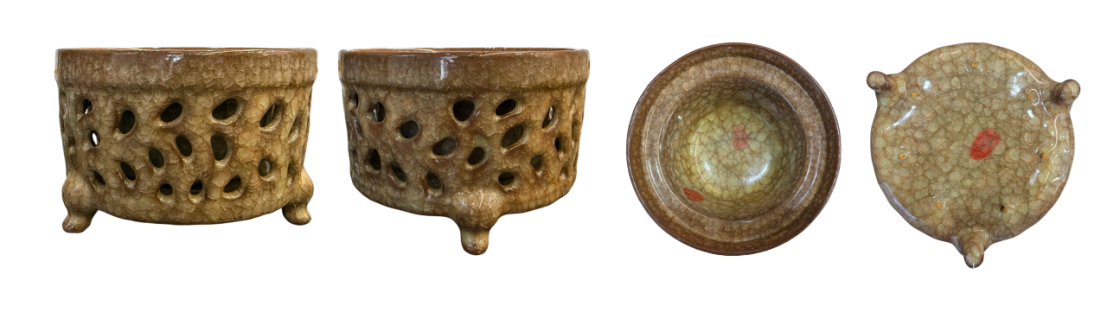
釉面是这件香炉最具辨识度的特征,它融合了汝窑与哥窑的开片美学,呈现出独特的冰片纹效果。细密的裂纹如冰面碎裂,层层叠叠分布于米黄与褐调交织的釉面之上,纹路深浅交错、大小不均,在光线折射下泛着温润的光泽,既保留了汝窑蝉翼纹的细腻,又兼具哥窑开片的层次变化。这种开片并非工艺缺陷,而是胎釉膨胀系数差异在高温冷却中自然形成的 “缺陷之美”,是宋代匠人对自然造化的主动呼应,让每一件器物都拥有独一无二的纹理,暗合 “万物各有其性” 的道家思想。炉底可见细小的支钉痕,是宋代官窑系器物 “裹足支烧” 工艺的典型遗存,印证了其作为宫廷或文房用瓷的身份,而釉面中隐约可见的红斑晕染,则为素雅的青褐釉色增添了一抹灵动的暖意。
The glaze surface is the most recognizable feature of this censer, integrating the crack aesthetics of Ru and Ge kilns to present a unique ice-crack pattern. Fine cracks, like shattered ice, are layered on the glaze surface interwoven with beige and brown tones. The patterns are staggered in depth and vary in size, glowing with a warm luster under light refraction. It retains the delicacy of Ru kiln's cicada-wing patterns while embodying the hierarchical changes of Ge kiln's cracks. This kind of cracking is not a craftsmanship defect, but a "beauty of imperfection" naturally formed by the difference in expansion coefficients between the body and glaze during high-temperature cooling. It is the Song Dynasty craftsmen's active response to natural creation, endowing each vessel with a unique texture that echoes the Taoist thought of "all things have their own nature". Small nail marks can be seen on the bottom of the furnace, a typical relic of the "foot-wrapped supported firing" process of official kiln vessels in the Song Dynasty, confirming its identity as a porcelain for court or study use. The faint red halo visible in the glaze adds a touch of lively warmth to the elegant blue-brown glaze.
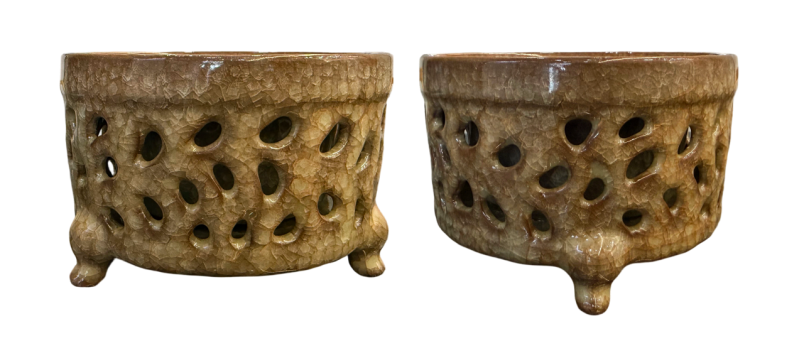
镂空工艺的运用,让这件香炉超越了单纯的实用功能,成为兼具视觉美感与精神意涵的艺术作品。炉身的孔洞并非随意开凿,而是遵循疏密有致的布局原则,大小不一的椭圆形孔洞相互交错,既保证了焚香时烟气的顺畅流通,又让光线穿透炉身,在内部形成斑驳的光影效果,如同将自然天光引入器物之中。这种设计与宋代文人 “窗含西岭千秋雪” 的诗意审美一脉相承,当炉内青烟缓缓溢出,穿过细密的开片纹路与镂空孔洞,在案头缭绕成云雾,便构成了 “焚香、点茶、挂画、插花” 四般闲事的核心场景,是宋人追求 “诗意栖居” 的生动写照。与普通瓷炉相比,镂空设计更考验匠人对胎体强度与釉面附着力的把控,既要避免烧制过程中胎体变形,又要保证釉层均匀覆盖,体现了宋代制瓷工艺的精湛水准。
The application of openwork technology elevates this censer beyond a mere functional object to an artwork that combines visual beauty and spiritual meaning. The holes in the body are not randomly drilled but follow a well-spaced layout principle. Oval holes of varying sizes are interlaced, ensuring smooth circulation of smoke during incense burning while allowing light to penetrate the body, forming a mottled light and shadow effect inside, as if introducing natural skylight into the vessel. This design inherits the poetic aesthetic of Song literati, "The window frames the Western Ridge with its thousand-year snow". When the green smoke inside the furnace slowly overflows, passing through the fine crack patterns and openwork holes, and curls into mist on the desk, it constitutes the core scene of the "four idle pursuits"—burning incense, preparing tea, hanging paintings, and arranging flowers—a vivid reflection of the Song people's pursuit of "poetic dwelling". Compared with ordinary porcelain censers, the openwork design tests the craftsman's control over the body strength and glaze adhesion, requiring both avoiding deformation of the body during firing and ensuring uniform coverage of the glaze layer, reflecting the exquisite level of porcelain making in the Song Dynasty.
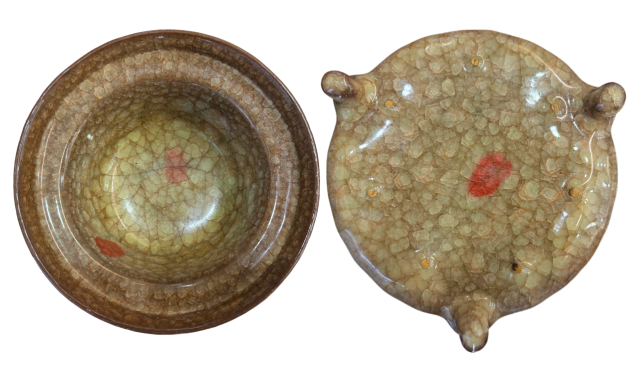
从文化价值来看,这件汝哥釉三足镂空香炉是宋代社会生活与精神世界的缩影。它既承载着宫廷用瓷的工艺规范,又融入了文人阶层的审美趣味,是 “雅文化” 从宫廷走向民间的物质见证。三足鼎立的造型,暗合中国传统文化中 “稳” 与 “和” 的理念,既象征着天地人的和谐共生,又呼应了宋代士大夫 “修身、齐家、治国、平天下” 的理想追求。而冰片纹的自然开片与镂空的通透设计,则体现了宋人对 “自然” 与 “留白” 的推崇,不刻意追求完美,而是在残缺与通透中感悟生命的本真。历经数百年岁月流转,这件香炉依然完好保存,釉面温润如新,开片纹路愈发清晰,不仅是一件珍贵的瓷器艺术品,更是连接古今的文化纽带,让我们得以触摸宋代文人的生活温度,感受中国传统工艺的不朽魅力。
From a cultural value perspective, this Ru-Ge glazed three-legged openwork censer is a microcosm of social life and spiritual world in the Song Dynasty. It carries the craftsmanship standards of court porcelain while integrating the aesthetic tastes of the literati class, serving as a material witness to the spread of "elegant culture" from the court to the common people. The three-legged tripod shape subtly embodies the traditional Chinese concepts of "stability" and "harmony", symbolizing the harmonious coexistence of heaven, earth, and man, and echoing the ideal pursuit of Song scholar-officials to "cultivate oneself, regulate the family, govern the state, and pacify the world". The natural cracking of the ice-crack pattern and the transparent openwork design reflect the Song people's reverence for "nature" and "negative space", not deliberately pursuing perfection but perceiving the authenticity of life through imperfection and transparency. After hundreds of years of circulation, this censer remains well-preserved, with a warm glaze and increasingly clear crack patterns. It is not only a precious porcelain artwork but also a cultural link connecting the past and present, allowing us to touch the life temperature of Song literati and feel the immortal charm of traditional Chinese craftsmanship.
郑重声明:本文版权归原作者所有,转载文章仅为传播更多信息之目的,如作者信息标记有误,请第一时间联系我们修改或删除,多谢。