Premium Recommendation - Fu Hongyi · Tiger
*本次藏品:傅鸿义虎*
典藏尺寸 长:140cm宽:69cm
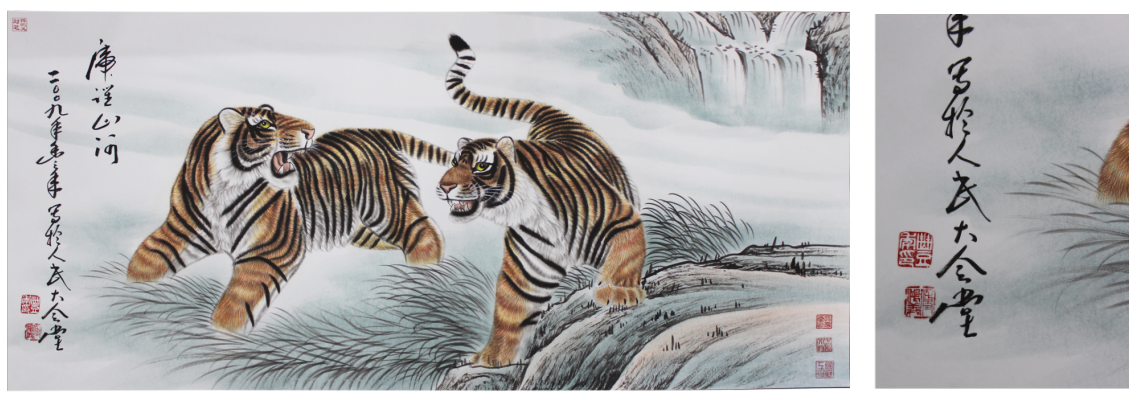
在中国传统绘画谱系中,“虎” 是极具象征意义的经典题材,承载着民族精神与文化记忆。从商周青铜器上的虎纹、汉画像石中的虎形,到近现代张善孖、冯大中诸家的虎图,虎的形象始终与 “勇猛、威严、忠义、镇宅” 等文化符号紧密相连。这幅《虎耀山河》(亦名《傅鸿义虎》)创作于二〇〇九年春月,落款 “写于人民大会堂”,以双虎为核心意象,将工笔技法与写意意境融为一体,既是当代虎画创作的代表性作品,也是对传统虎文化的现代诠释。画面主体:双虎的姿态与神韵。画面核心为两只东北虎,一左一右立于山石之上,形成动静对比的视觉张力,左侧猛虎:呈前扑姿态,前爪踏于草间,身体微微前倾,虎口大张,露出锋利獠牙,双目圆睁,目光锐利如炬,虎尾紧绷,展现出蓄势待发的威猛气势,是典型的 “下山虎” 意象,象征着进取与力量。右侧猛虎:稳稳立于岩石边缘,身体侧转,目光望向左侧同伴,虎尾高高翘起,尾尖黑白相间的斑纹清晰可见,姿态沉稳威严,更具 “山君” 的王者气度,与左侧猛虎形成呼应,一刚一柔、一动一静,共同构建出和谐而充满张力的画面结构。两只老虎的斑纹以细腻的工笔丝毛技法绘制,橙黄底色与黑色条纹层次分明,毛发根根可见,质感蓬松而富有力量感;眼部刻画尤为传神,瞳孔深邃,眼神中既有猛兽的凶厉,又透出一种沉稳的威严,避免了传统虎画中常见的 “凶而无韵” 的弊病。
Within the tradition of Chinese painting, the ‘tiger’ is a classic subject of profound symbolic significance, embodying the national spirit and cultural memory. From the tiger motifs on Shang and Zhou dynasty bronze ware and the tiger figures in Han dynasty relief stones, to the tiger paintings of modern artists such as Zhang Shanzhu and Feng Dazhong, the image of the tiger has always been closely associated with cultural symbols such as ‘bravery, majesty, loyalty, and protection of the home’. This work, *Tigers Illuminating the Mountains and Rivers* (also known as *Fu Hongyi’s Tigers*), was created in the spring of 2009 and bears the inscription “Painted at the Great Hall of the People”. Centring on the image of two tigers, it seamlessly blends the meticulous techniques of gongbi with the free-spirited aesthetic of xieyi. It stands not only as a representative work of contemporary tiger painting but also as a modern interpretation of traditional tiger culture. The focal point of the composition: the posture and spirit of the twin tigers. At the heart of the painting are two Amur tigers, standing one on the left and one on the right atop rocky outcrops, creating a visual tension through the contrast between movement and stillness. The tiger on the left: adopts a lunging posture, its front paws planted in the grass, body leaning slightly forward, jaws wide open to reveal sharp fangs, eyes wide and gleaming with piercing intensity, and tail taut—exuding a formidable, ready-to-strike presence. This is the quintessential ‘tiger descending the mountain’ motif, symbolising ambition and strength. The tiger on the right: stands firmly on the edge of the rock, its body turned sideways, gazing towards its companion on the left. Its tail is held high, the black-and-white markings at the tip clearly visible. Its posture is steady and dignified, exuding the regal bearing of a ‘Lord of the Mountain’. It echoes the tiger on the left, one fierce and one gentle, one dynamic and one still, together constructing a harmonious yet tension-filled composition. The markings of both tigers are rendered using a meticulous, detailed brushwork technique. The orange-yellow background and black stripes are distinctly layered, with every individual hair visible, creating a texture that is both fluffy and full of power. The depiction of the eyes is particularly vivid: the pupils are deep, and the gaze conveys both the ferocity of a wild beast and a sense of calm dignity, thereby avoiding the common pitfall in traditional tiger paintings of being “ferocious yet lacking in grace”.
*本次藏品:傅鸿义虎*
典藏尺寸 长:140cm宽:69cm
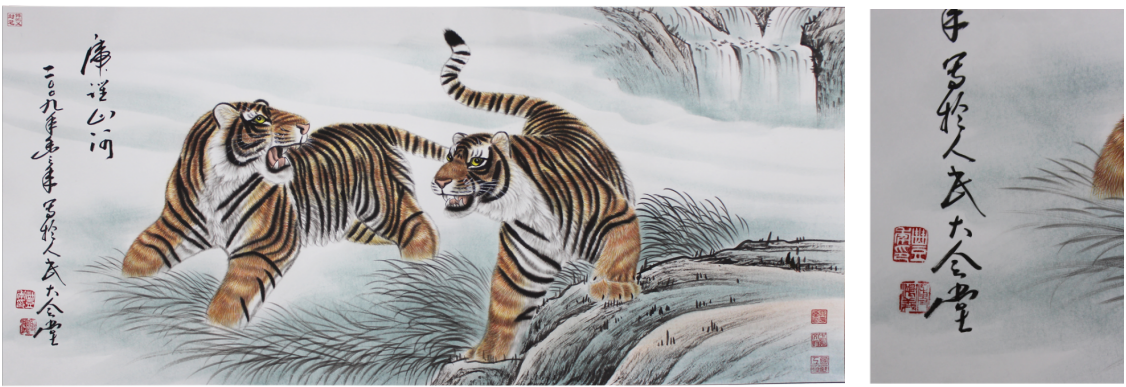
背景以淡墨晕染出云雾缭绕的山水意境,右侧绘有飞瀑流泉,山石以枯笔皴擦,线条硬朗,与虎身的细腻形成对比;前景的丛草以细劲的线条勾勒,随风摇曳,增添了画面的动感与生机。
整体构图采用 “近实远虚” 的传统山水画法则:双虎占据画面中下部核心位置,是视觉焦点;背景的云雾、瀑布向远处延伸,营造出开阔深远的空间感,呼应了 “虎耀山河” 的主题 —— 猛虎不仅是山林的主宰,更象征着对家国山河的守护与气魄。画面左侧题款为行书:“虎耀山河”,下方落款:“二〇〇九年春月 写于人民大会堂”,字体流畅洒脱,笔力遒劲,与画面的雄浑气势相得益彰。题款下方钤有两方红色印章,一方为作者名章,一方为闲章,朱红印泥与墨色、虎身的橙黄形成鲜明色彩对比,既平衡了画面构图,又体现了中国传统书画 “诗书画印” 一体的文人意趣。落款中 “人民大会堂” 的标注,赋予了作品特殊的时代语境与政治象征意义,使其超越了单纯的艺术创作,成为承载家国情怀的文化载体。
雾以淡墨多次渲染,层次丰富,虚实相生,营造出缥缈空灵的氛围;山石以枯笔皴擦,线条硬朗,墨色浓重,与云雾的轻柔形成对比,凸显出山石的坚硬质感;飞瀑以留白与淡墨线条表现,水流湍急,动感十足,为画面注入了生机与活力。这种 “工笔写虎、写意造境” 的手法,是当代虎画创作的重要突破,既保证了主体形象的写实性,又赋予了画面传统山水画的意境美,使作品在 “形似” 与 “神似” 之间达到了平衡。
傅鸿义是当代知名国画家,专攻走兽画,尤擅画虎,其艺术风格深受冯大中、张善孖等前辈虎画名家影响:早年研习传统工笔花鸟,后专攻虎画,深入研究老虎的形态、习性与精神气质,曾多次深入东北虎林园观察写生,积累了大量素材;
其虎画作品既继承了传统工笔虎画的细腻写实,又融入了现代审美与时代精神,形成了 “工而不板、细而不腻、威而不凶” 的独特风格;作品多次入选全国美展,并被人民大会堂、中南海等机构收藏,《虎耀山河》是其代表作之一,集中体现了他的艺术成就与创作理念。
The background is rendered in pale ink washes to evoke a landscape shrouded in mist and clouds. On the right, a cascading waterfall and flowing spring are depicted; the rocks are rendered with dry-brush techniques and bold, angular lines, creating a contrast with the delicate rendering of the tigers’ bodies. In the foreground, tufts of grass are outlined with fine, vigorous lines, swaying in the breeze to add a sense of movement and vitality to the composition.
The overall composition adheres to the traditional landscape painting principle of ‘near real, far vague’: the pair of tigers occupies the central lower section of the composition, serving as the visual focal point; the mist and waterfall in the background extend into the distance, creating a sense of expansive and profound space, echoing the theme of ‘Tigers Illuminating the Mountains and Rivers’ — the mighty tigers are not only the rulers of the forests but also symbolise the protection and spirit of the homeland and its landscapes. On the left-hand side of the painting is an inscription in running script: ‘Tigers Illuminate the Mountains and Rivers’, with the signature below reading: ‘Painted in the Great Hall of the People, Spring 2009’. The calligraphy is fluid and unconstrained, with vigorous brushwork, perfectly complementing the painting’s majestic grandeur. Beneath the inscription are two red seals: one bearing the artist’s name and the other a personal seal. The vermilion seal paste forms a striking contrast with the ink and the tiger’s orange-yellow fur, balancing the composition whilst embodying the literati aesthetic of traditional Chinese art, where ‘poetry, calligraphy, painting and seals’ are integrated as one. The inclusion of “Great Hall of the People” in the signature endows the work with a specific historical context and political symbolism, elevating it beyond mere artistic creation to become a cultural vessel embodying patriotic sentiment.
The mist is rendered through multiple layers of light ink, creating rich depth and a interplay of solid and ethereal elements, evoking an ethereal and transcendent atmosphere; The rocks are rendered with dry-brush techniques, featuring bold, crisp lines and deep, rich ink tones that contrast with the softness of the mist, highlighting the rugged texture of the stones; the cascading waterfall is depicted through negative space and delicate ink lines, conveying the swift flow of the water with dynamic energy, infusing the composition with vitality and vigour. This technique of ‘meticulous rendering of the tiger, freehand creation of the setting’ represents a significant breakthrough in contemporary tiger painting. It ensures the realistic depiction of the subject whilst imbuing the composition with the aesthetic of traditional landscape painting, striking a balance between ‘resemblance in form’ and ‘resemblance in spirit’.
Fu Hongyi is a renowned contemporary Chinese painter specialising in animal painting, with a particular expertise in tigers. His artistic style has been deeply influenced by renowned predecessors in tiger painting such as Feng Dazhong and Zhang Shanzhu: in his early years, he studied traditional gongbi flower-and-bird painting before specialising in tiger painting, conducting in-depth research into the form, habits and spiritual temperament of tigers. He has made numerous visits to the Northeast Tiger Park to observe and sketch from life, accumulating a wealth of material;
His tiger paintings not only inherit the meticulous realism of traditional gongbi tiger painting but also incorporate modern aesthetics and the spirit of the times, forming a unique style characterised by being “meticulous without being rigid, detailed without being tedious, and majestic without being ferocious”. His works have been selected for the National Art Exhibition on numerous occasions and are held in the collections of institutions such as the Great Hall of the People and Zhongnanhai. *Tigers Illuminating the Mountains and Rivers* is one of his representative works, epitomising his artistic achievements and creative philosophy.

*本次藏品:傅鸿义虎*
典藏尺寸 长:140cm宽:69cm
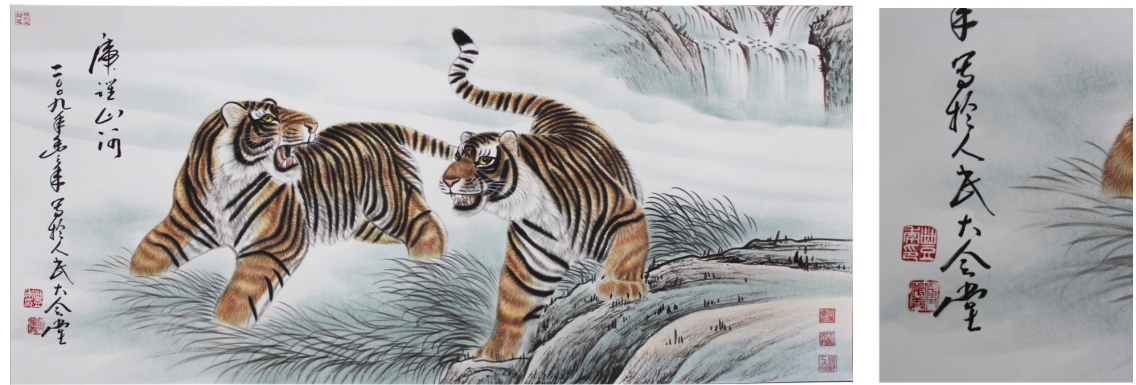
《虎耀山河》是一幅兼具艺术价值、文化价值与时代意义的当代虎画精品。它以细腻的工笔技法刻画了双虎的威猛神韵,以写意山水营造了开阔深远的山河意境,将传统虎文化与当代家国情怀完美融合,既展现了中国传统绘画的魅力,又传递了新时代的民族精神。
从画面中的双虎姿态,到题款中的 “虎耀山河”,再到落款的 “人民大会堂”,这幅作品的每一个细节都在诉说着当代中国的文化自信与民族气魄。它不仅是傅鸿义个人艺术成就的代表作,更是当代中国美术史上的重要篇章,为我们理解传统与现代、艺术与时代的关系提供了生动的样本。
在未来,随着传统文化的复兴与当代美术的发展,《虎耀山河》必将继续散发其独特的艺术光芒,成为连接过去与未来、传统与现代的文化纽带,让 “虎耀山河” 的精神永远传承下去。
‘Tigers Illuminating the Land’ is a masterpiece of contemporary tiger painting that embodies artistic, cultural and historical significance. Employing meticulous gongbi techniques, it captures the majestic spirit of the twin tigers, whilst using freehand landscape painting to evoke a vast and profound sense of the land and its rivers. It seamlessly blends traditional tiger culture with contemporary patriotic sentiment, showcasing the charm of traditional Chinese painting whilst conveying the national spirit of the new era.
From the posture of the twin tigers in the composition, to the inscription ‘Tiger Illuminating the Mountains and Rivers’, and finally to the signature ‘Great Hall of the People’, every detail of this work speaks of contemporary China’s cultural confidence and national spirit. It is not only a masterpiece representing Fu Hongyi’s personal artistic achievement, but also a significant chapter in the history of contemporary Chinese art, providing a vivid example for understanding the relationship between tradition and modernity, art and the times.
In the future, with the revival of traditional culture and the development of contemporary art, *Tigers Illuminating the Mountains and Rivers* will undoubtedly continue to radiate its unique artistic brilliance, serving as a cultural bridge connecting the past and the future, tradition and modernity, and ensuring that the spirit of “Tigers Illuminating the Mountains and Rivers” is passed down for generations to come.
*本次藏品:傅鸿义虎*
典藏尺寸 长:140cm宽:69cm
以上藏品相关信息请与:四川尚亿拍卖有限公司联系。
For information about the above collections, please contact: Sichuan Shangyi Auction Co., Ltd
郑重声明:本文版权归原作者所有,转载文章仅为传播更多信息之目的,如作者信息标记有误,请第一时间联系我们修改或删除,多谢。